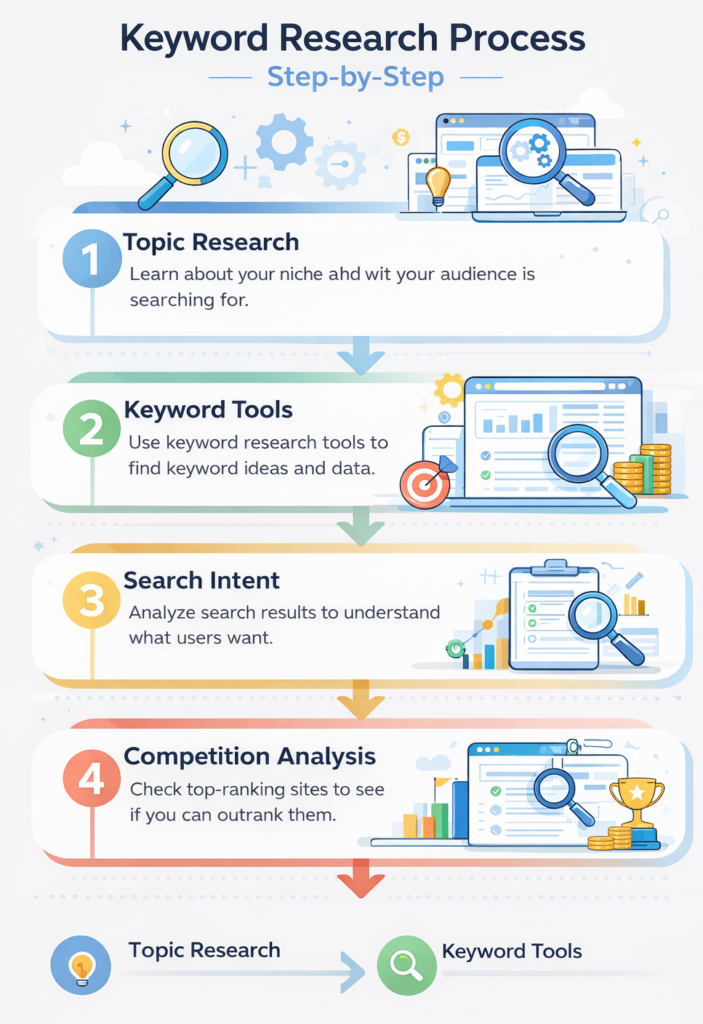
Keyword research process explained step-by-step
Keyword research is the foundation of successful SEO. This keyword research guide for beginners will help you understand how to find the right keywords, analyze search intent, and evaluate competition step by step. Without proper keyword research, even high-quality content may fail to rank on Google.
In this complete guide, you will learn the difference between short-tail and long-tail keywords, how to use keyword research tools, and how to choose keywords that actually drive traffic. Whether you are starting a blog or improving an existing website, this guide will give you a clear roadmap to better rankings.
This keyword research guide will help you understand the complete process step by step.
What is Keyword Research?
Keyword research is the process of finding and analyzing the words and phrases that people type into search engines like Google. It helps website owners understand what their target audience is searching for online.
By choosing the right keywords, you create content that aligns with user intent and improves your chances of ranking higher in search results.
Simply put, keyword research enables you to communicate with your audience in their language and draw in the appropriate traffic to your website.
Why Is Keyword Research Important for SEO?
Keyword research is important because it helps you create content that people are actively searching for. Without proper keyword research, you may write articles that no one is looking for.
When you target the right keywords, your website can appear in search results, bring organic traffic, and increase conversions. It also helps you understand competition, search intent, and content gaps in your niche. In short, keyword research is the foundation of successful SEO.
Types of Keywords
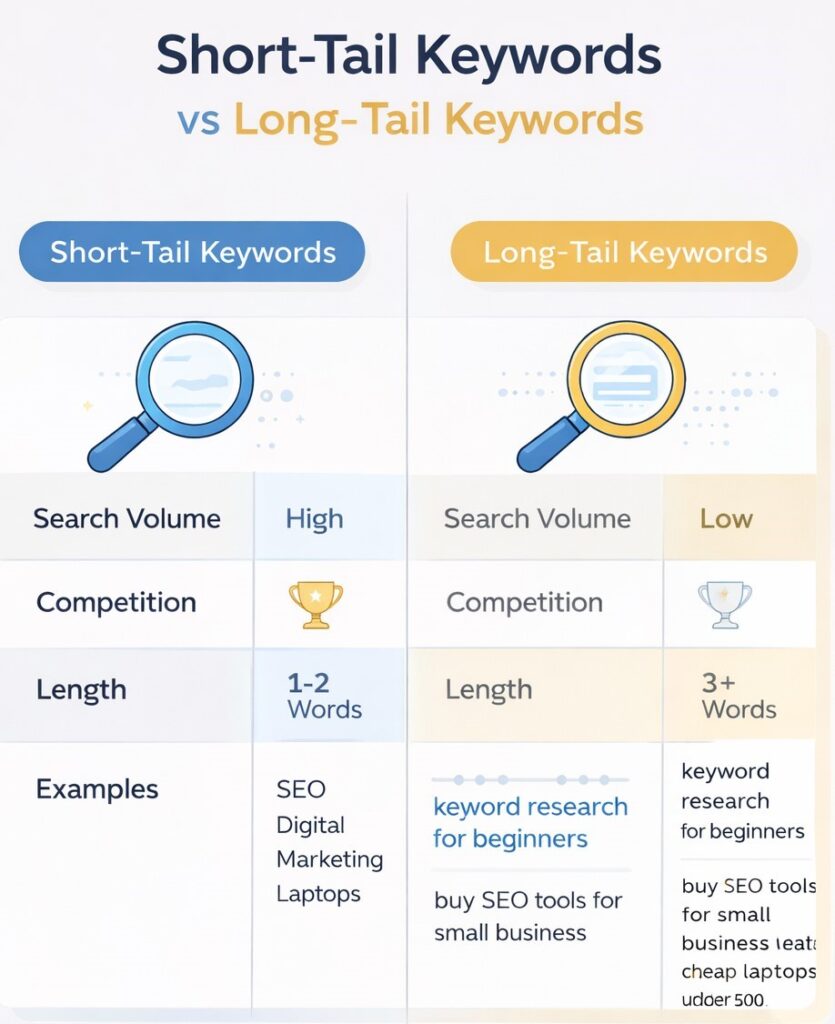
Short-tail vs long-tail keywords comparison chart
Understanding the different types of keywords helps you build a smarter content strategy. Some keywords bring high search volume but strong competition, while others attract targeted visitors who are ready to take action. Knowing the difference allows you to choose keywords that match your goals and improve your chances of ranking.
Short-Tail Keywords
In this keyword research guide, understanding keyword types is very important.
Short-tail keywords are broad search terms that usually contain one or two words. For example, “SEO,” “digital marketing,” or “laptops.”
These keywords have high search volume but also very high competition. Because they are general, it is difficult for new websites to rank for them.
Short-tail keywords are good for understanding a topic but are usually not the best choice for beginners trying to rank quickly.
Long-Tail Keywords
Long-tail keywords are longer and more specific search phrases, usually containing three or more words. For example, “keyword research for beginners” or “best SEO tools for small businesses.”
These keywords have lower competition and more targeted search intent. They are easier to rank for and often bring more qualified traffic.
Beginners should focus on long-tail keywords because they are easier to rank for.
Informational vs Transactional Keywords
Informational keywords are used when users want to learn something, such as “what is keyword research” or “how to do SEO.”
Transactional keywords are used when users are ready to take action, such as “buy SEO course” or “best SEO service near me.”
Understanding search intent helps you create the right type of content. Informational content builds trust, while transactional content drives conversions.
How to Do Keyword Research (Step-by-Step)
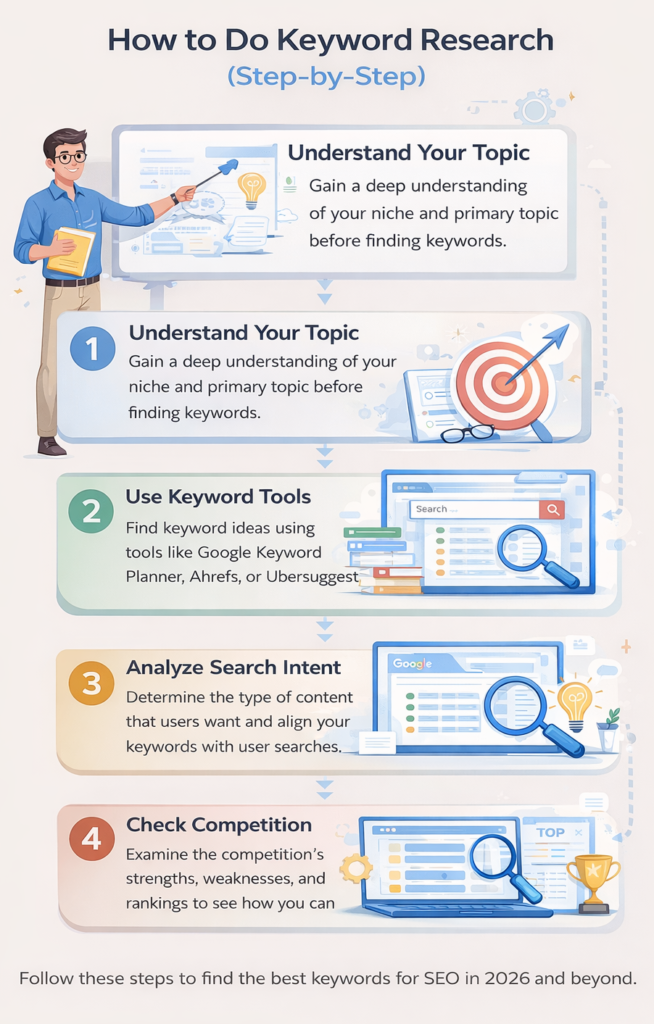
How to Do Keyword Research – Step-by-Step Guide
Now that you understand the types of keywords, it’s time to learn the process. Keyword research is not guesswork — it follows a structured method.
By following these four practical steps, you can identify profitable keywords, analyze user intent, and select opportunities that give you the best chance to rank on search engines.
Step 1: Understand Your Topic
Start by clearly understanding your niche and target audience. Consider the problems your audience faces and the questions they may search for.
Brainstorm basic keyword ideas related to your topic. This step helps you build a strong foundation before using any keyword tools.
Step 2: Use Keyword Tools
Use free tools like Google Keyword Planner, Ubersuggest, or Google autocomplete suggestions to discover keyword ideas. These tools show search volume, competition level, and related keywords.
Focus on finding long-tail keywords that are easier to rank for.
Step 3: Analyze Search Intent
Before selecting a keyword, check what type of content is ranking on Google. Are the results blog posts, product pages, or videos? This helps you understand user intent.
Always create content that matches what users expect to see.
Step 4: Check Competition
Search for your keyword on Google and analyze the top-ranking websites. If strong authority websites dominate the results, ranking may be difficult.
Look for keywords where smaller websites are already ranking — this increases your chances of success.
Free Keyword Research Tools for Beginners
This keyword research guide also recommends beginner-friendly tools.
There are many free tools available for beginners. Google Autocomplete, Google Trends, and Google Keyword Planner are good starting points.
These tools help you find trending topics and search volume data without spending money. As you grow, you can explore paid tools for deeper analysis.
Beginners can use free tools like Google Keyword Planner and Google Trends to find keyword ideas and analyze search popularity.
Common Keyword Research Mistakes to Avoid
Many beginners target high-competition keywords or ignore search intent. Another common mistake is not analyzing competitors before creating content. Avoid these errors by focusing on long-tail keywords and user-focused content.
Another common mistake is not analyzing competitors before writing an article. Avoid these mistakes by focusing on long-tail keywords and writing helpful, user-focused content.
You should also follow our On-Page SEO checklist before publishing content.
Final Thoughts on This Keyword Research Guide
Keyword research is not just about finding popular search terms—it’s about understanding your audience and their needs. When you combine search volume, competition analysis, and user intent, you create content that truly serves readers. The more strategic your keyword research process becomes, the easier it is to build consistent organic traffic.
If you apply the steps shared in this keyword research guide for beginners, you will be able to find better keyword opportunities and improve your SEO results over time.
If you’re new to SEO, read our complete SEO for Beginners guide to build a strong foundation.
Conclusion
Keyword research remains one of the most important parts of SEO success. By understanding how people search, analyzing keyword difficulty, and focusing on user intent, you can create content that ranks and converts.
Instead of chasing random keywords, follow a structured approach and build your strategy around real search data. Start applying these techniques today, and you’ll see how effective keyword research can transform your website’s growth.
This keyword research guide gives you a clear step-by-step system to find profitable and low-competition keywords.
If you follow these 7 steps consistently, you will build a strong SEO foundation and attract targeted traffic to your website in 2026 and beyond.
By following this keyword research guide, you can confidently start your SEO journey. Start your keyword research today and create content that ranks on Google.
Frequently Asked Questions
1. What is keyword research in SEO?
- A keyword research guide is a step-by-step process of finding and analyzing words and phrases that people type into search engines. It helps you understand what your audience is searching for so you can create relevant and optimized content.
2. What is the difference between short-tail and long-tail keywords?
- Short-tail keywords are broad search terms with a high search volume and a high level of competition. Long-tail keywords are more specific phrases with lower search volume but easier ranking opportunities, making them ideal for targeting niche markets and attracting more qualified traffic.
3. Which keyword research tools are best for beginners?
- Beginners can start with Google Keyword Planner, Google Trends, and Google Autocomplete. These tools provide keyword ideas, search volume data, and trend analysis.
4. How many keywords should I target per article?
- You should focus on one primary keyword and 3–5 related keywords per article to maintain clarity and avoid keyword stuffing.